QSR Seating Lead Time and Shipping for Multi-Location Openings in the US and Canada
Plan fast casual and QSR seating deliveries: production lead time, flat-pack booths, packing by store, LCL vs FCL, and US and Canadian customs basics.
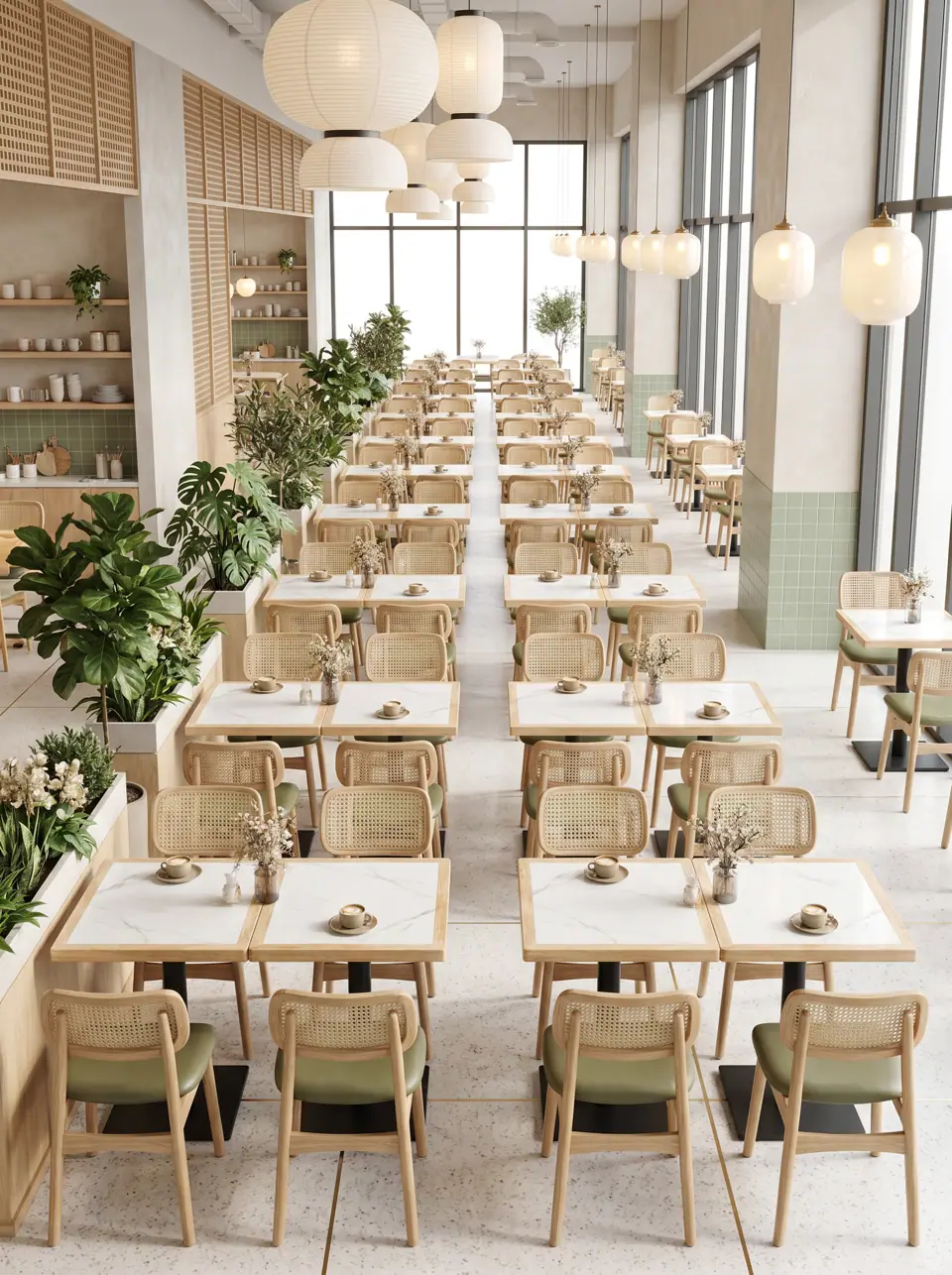
Short answer: A fast casual seating package is typically produced in 30-45 days for standard designs and 45-60 days for custom work after drawing and sample approval, plus ocean transit and customs clearance, with each date confirmed in the quote. For multi-location operators the bigger lever is not speed but predictability: lock one spec, pack and label by store, and decide early whether stores ship together in full containers or one at a time.
QSR Seat (a line by EASEN Commercial Furniture) builds booths, chairs and counter seating for fast casual, QSR and food hall operators in our own production base in Lecong, Foshan, China, and quotes FOB, CIF or DDP on request. This guide covers the logistics side of getting seats into stores in the US and Canada. It is general information; your customs broker is the authority on filings and duties.
What sets the delivery date for a store opening?
Work backwards from the soft-opening date. The furniture needs to be on site before final cleaning and staff training, so the planning sequence looks like this:
| Milestone | Typical owner | Notes |
|---|---|---|
| Seat plan and package frozen | Operator / designer | Seat count per store, booth lengths, chair and high-top quantities |
| Shop drawings approved | Factory draws, operator signs | One drawing set can cover every store using the same package |
| Brand color and material sample approved | Operator | Do this once for the program, not per store |
| Production | Factory | Generally 30-45 days for standard SKUs, 45-60 days for custom |
| Inspection and balance | Operator / third party | Photos, video or an independent inspection |
| Loading and ocean freight | Forwarder | Full or shared container |
| Customs clearance | Broker | US: ISF and entry; Canada: CBSA declaration |
| Delivery and install | GC / installer | Coordinate with construction schedule |
The first store takes the longest because drawings and samples are new. From store two onwards, an approved spec means production can start as soon as the order is confirmed.
Why flat-pack booths change the freight math
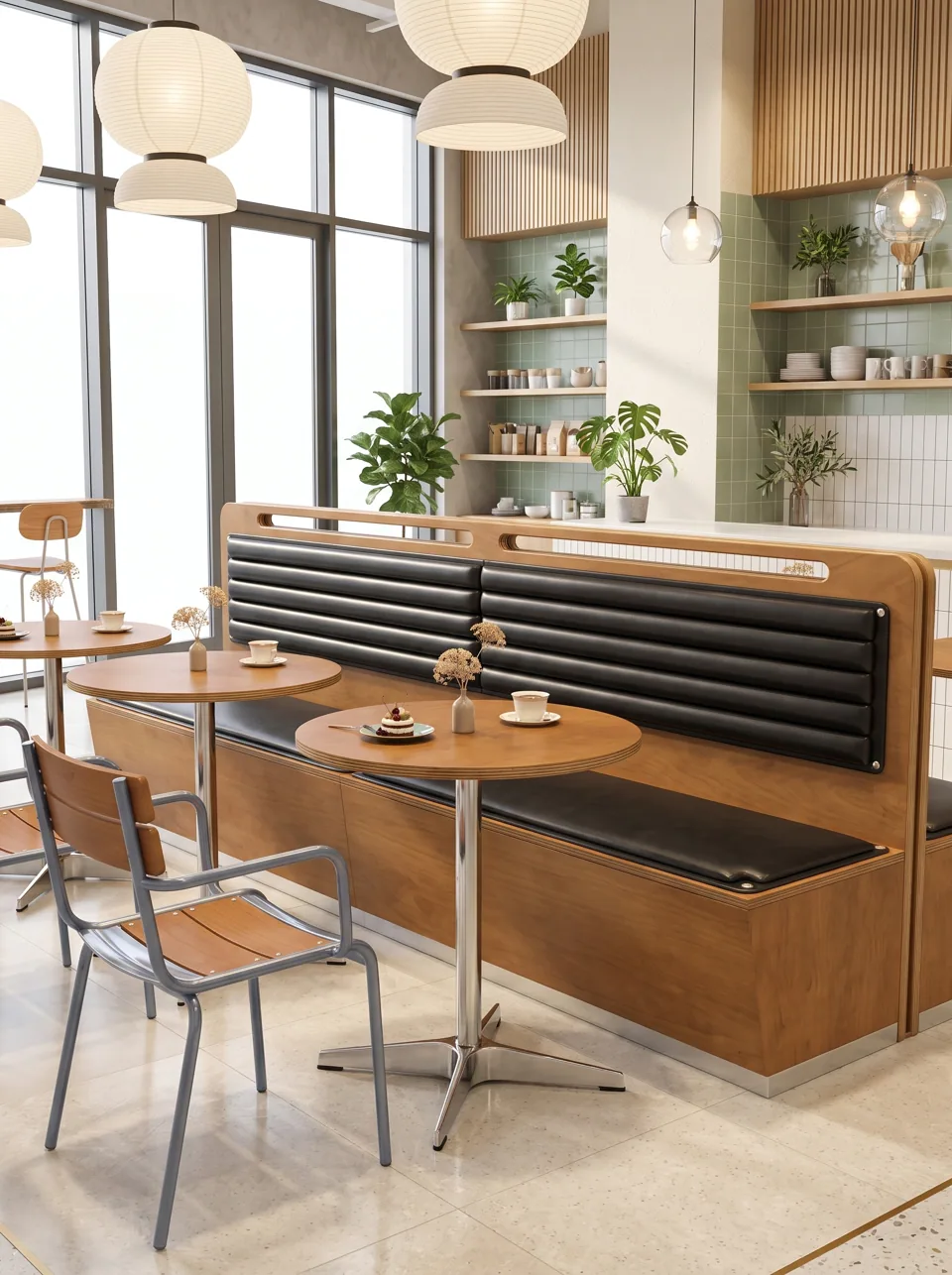
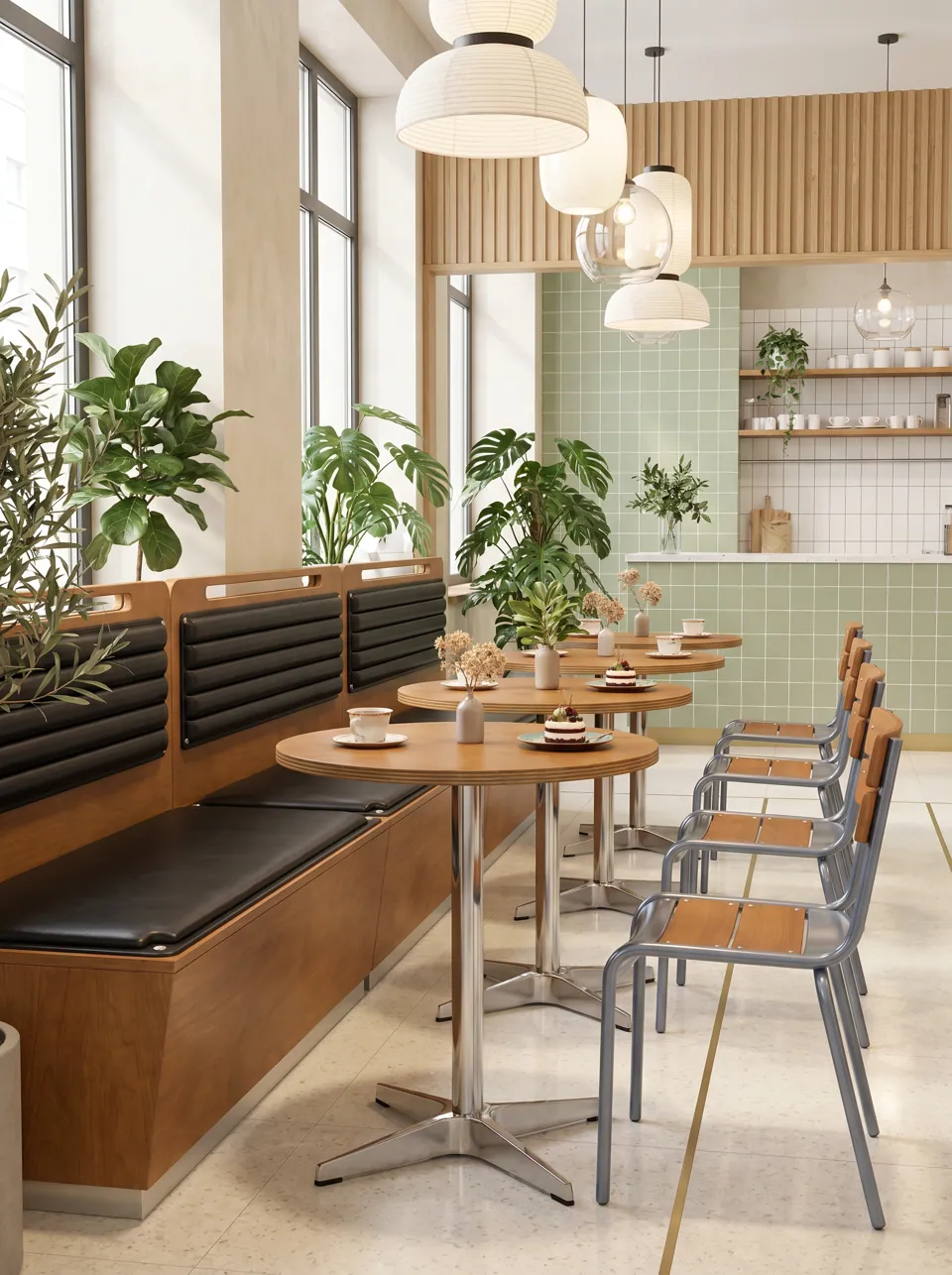
Booths are mostly air. A fully assembled booth ships a lot of empty space, which costs container capacity on every store. For QSR programs we often recommend knock-down construction: seat boxes, backs and end panels ship flat and bolt together on site. Our Knock-Down Flat-Pack Booth is designed this way.
| Construction | Container efficiency | Install time on site | Best for |
|---|---|---|---|
| Fully assembled booth | Low | Shortest | Single stores, tight install windows |
| Sectional booth (seat and back bolt together) | Medium | Short | Most fast casual stores |
| Knock-down flat-pack | High | Longer, needs a simple tool kit | Multi-store programs, high-volume rollouts |
| Stackable chairs | High (nested) | None | Every QSR |
Fewer cubic feet per store means either more stores per container or a smaller container per store. We send a packing list with carton dimensions before booking so your forwarder can plan loads accurately.
How should a multi-store order be packed?
The goal is that each store's install crew can find its furniture without opening anyone else's.
- Label by store. Every carton carries the store number or name, the item code from the package, and "carton X of Y".
- Group by store in the container. Load one store's cartons together, with a printed packing list per store.
- Bag hardware per booth. Bolts, connector plates and glides labelled to the booth number on the drawing.
- Mark the load order. If one container serves two stores opening a week apart, the first store's goods load last so they come out first.
- Include spares. A small kit of seat cushions, glides and touch-up material per store saves emergency reorders. Our Booth Refresh Kit is built for this.
LCL, FCL or a mix?
- Full container per store (FCL). Sealed at our factory, opened at the store or a local depot. Least handling and least damage risk.
- Full container for several stores. Most economical when stores open close together and a local warehouse or GC can split the load.
- Shared container (LCL). Works for single-store top-ups, replacement parts or a pilot store sample set. Expect extra handling at consolidation warehouses and allow more time.
What paperwork do US and Canadian imports need?
United States
- ISF must be filed before the container is loaded in China. Your broker needs supplier and shipment details early.
- Entry and duties. Seating sits in HTS heading 9401, tables in 9403. Goods of Chinese origin carry additional Section 301 duties on top of normal duty, and these have changed several times; confirm the current position with your broker when you build per-store budgets.
- Incoterms. FOB suits operators with a national forwarder; DDP gives one delivered figure per store; CIF sits in between.
- Fire specification. We can specify booth foams and covers to CAL TB 117-2013 on request; local codes vary, so check with your fire marshal and landlord.
Canada
Commercial imports are declared to the Canada Border Services Agency through a licensed customs broker, who classifies the goods and accounts for duty and GST/HST. You need a business number with an import-export account. Ask your broker which documents they want from us; we supply the commercial invoice, packing list and certificate of origin on request. Canadian stores are often served through Vancouver or Montreal and then by rail or truck, though your forwarder will choose the route.
Paying for production and checking it before it ships
Each order starts on a deposit. Before the balance is due and goods are loaded, we send photos and video of the finished furniture: brand colors checked in daylight, booth dimensions measured, carton labels shown per store. For programs, many operators book a third-party inspector such as SGS, QIMA or Bureau Veritas for the first store and rely on photo inspection after that. Terms are confirmed in each quote.
Program logistics checklist
- Freeze the seat plan and package before ordering store one.
- Approve drawings and brand color samples once for the program.
- Decide knock-down or assembled booths based on install crew and freight.
- Agree Incoterms and appoint a customs broker (US and Canada if needed).
- Set store labelling rules with your GC.
- Schedule inspection before the balance.
- Book delivery to the store or depot with the construction schedule in hand.
- Hold a spares kit per store for the first year of service.
Where rollouts lose time and money
- Changing the spec between stores. Every change means new drawings, new samples and a new production slot.
- Shipping air. Fully assembled booths cost container space on every store.
- One packing list for three stores. Install crews waste a day sorting cartons.
- No spares on site. One torn seat in week two becomes a costly air shipment.
- Booking customs late. The US ISF is due before loading.
For layouts that maximize seats per square foot, see space-saving booths.
FAQ
How long does a fast casual seating package take?
Plan on about 30-45 days of production for standard designs and 45-60 days for custom work after drawing and sample approval, then transit and customs. Repeat stores on an approved spec can move faster through the drawing stage.
Can you ship furniture for several stores in one container?
Yes. We load and label by store, with a separate packing list for each, and can set the load order so the first store to open unloads first.
Do you ship to Canada?
Yes. We quote FOB, CIF or DDP, and your Canadian customs broker handles the CBSA declaration.
Are flat-pack booths strong enough for QSR use?
Yes, when designed for it. Knock-down booths use bolted steel or timber connections and the same commercial foam and upholstery as assembled booths; they simply arrive in parts.
Send your floor plan, seat target and brand colors. We will reply with a marked-up layout, recommended pieces and a quote.
Request a quote